Damage detection
Sweden
Bearing fault detected 3 months before a turbine had to stop

Project summary
Location
Sweden
Chosen products
An early signal outside the intended scope
The wind farm operator uses ON-TOWER with :NOISE for acoustic noise monitoring and :EVENT LIGHTNING for lightning monitoring across the turbines at the site. :NOISE records tonal noise components in dedicated low, medium and high frequency channels and flags deviations from the baseline.
In one case, the :NOISE metrics on a single turbine began to shift in early July, months before any operational problem was visible on site. The change appeared consistently across the low, medium and high frequency bands the product tracks, well before it showed up anywhere else.
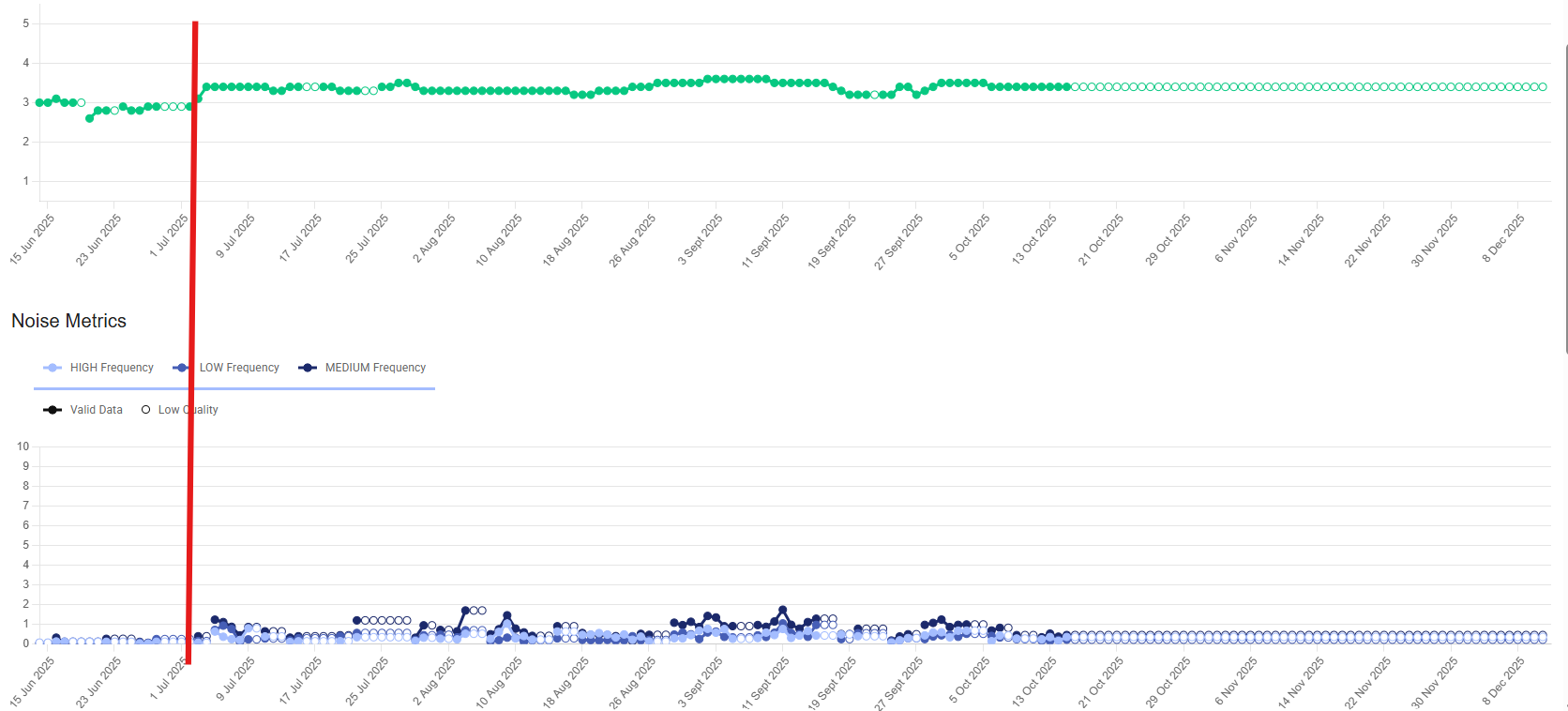
Copyright: EOLOGIX-PING
The turbine was later stopped after a main bearing fault was confirmed, and it remained offline awaiting a replacement. Standing next to the turbine before the failure, the site’s operations team could not hear any difference in the operating noise. The turbine manufacturer’s own analytics independently flagged the same issue only three days after the change first became visible in the :NOISE data, corroborating that the signal was a genuine early indicator rather than noise in the data itself.
Why :NOISE made the difference
- Broadband coverage: because :NOISE tracks tonal components across three frequency bands rather than a single blade-damage signature, it can register drivetrain-related changes that fall outside its original design intent.
- Independent validation: the turbine manufacturer’s own case, opened only days after the ON-TOWER signal changed, confirmed the finding was not a false positive.
- Early visibility: the change in noise metrics was visible around three months before the turbine had to be taken offline, time that can support planning for inspection and parts procurement in comparable cases.
Conclusion
A system built to monitor rotor blades ended up giving an early warning for a drivetrain problem that no one could hear by ear. It is a reminder that acoustic monitoring data has value well beyond its primary use case, and that changes in noise parameters are worth investigating even when there is no visible blade damage.
Key takeaways
- Look beyond the intended use case: acoustic sensors installed for blade damage detection can also surface unrelated mechanical issues, such as bearing faults.
- Investigate every deviation: a consistent shift in noise metrics is worth a closer look, even without a matching blade damage pattern.
- Cross-check when possible: independent confirmation from a turbine manufacturer’s own analytics can help separate a genuine signal from noise.
Share this case study

Similar case studies


Get in touch with us
Reach out to us for tailored advice on your specific needs, to learn more about our technology, or to schedule a personal consultation. Our dedicated team is ready to assist you every step of the way.

Subscribe to our newsletter
Stay informed with the latest industry news, fascinating insights, and updates from EOLOGIX-PING delivered straight to your inbox.
PS.: We promise no spam.